Give the budget a job before choosing a suite
Plan a bathroom installation on a budget by deciding what the room must do, setting a total spending limit and protecting funds for hidden work. Start with function: a usable shower, sound plumbing, suitable ventilation and finishes that cope with the conditions. Choose decorative extras after those essentials have been allowed for.
Write down what is staying, what needs replacing and what is merely desirable. A worn bath panel is a different priority from a leaking shower connection. For a bathroom in Watford, a site assessment and a defined brief will tell you more than a national average that includes very different rooms and specifications.
Use a spending plan with a reserve
The following £8,000 plan is an arithmetic example, not a quotation or a current local price estimate. It shows how a homeowner could keep £1,000, or 12.5% of the total, unallocated while limiting the planned purchases and work to £7,000. The right reserve depends on the condition of the property and what can be assessed before removal.
The example allows £1,700 for the suite, taps, shower and storage; £1,200 for tiles, flooring and preparation materials; and £3,000 for installation and plumbing labour. A further £600 is allocated to electrical and ventilation work, with £500 for disposal and making good. Those planned allowances total £7,000, leaving the £1,000 reserve within the £8,000 limit.
Replace these allowances with the actual agreed prices for your project. If the quotation exceeds the limit, change the specification before starting rather than quietly spend the reserve on nicer fittings. Keep a separate record of committed costs, paid costs and money still available.
Keep the layout when it works
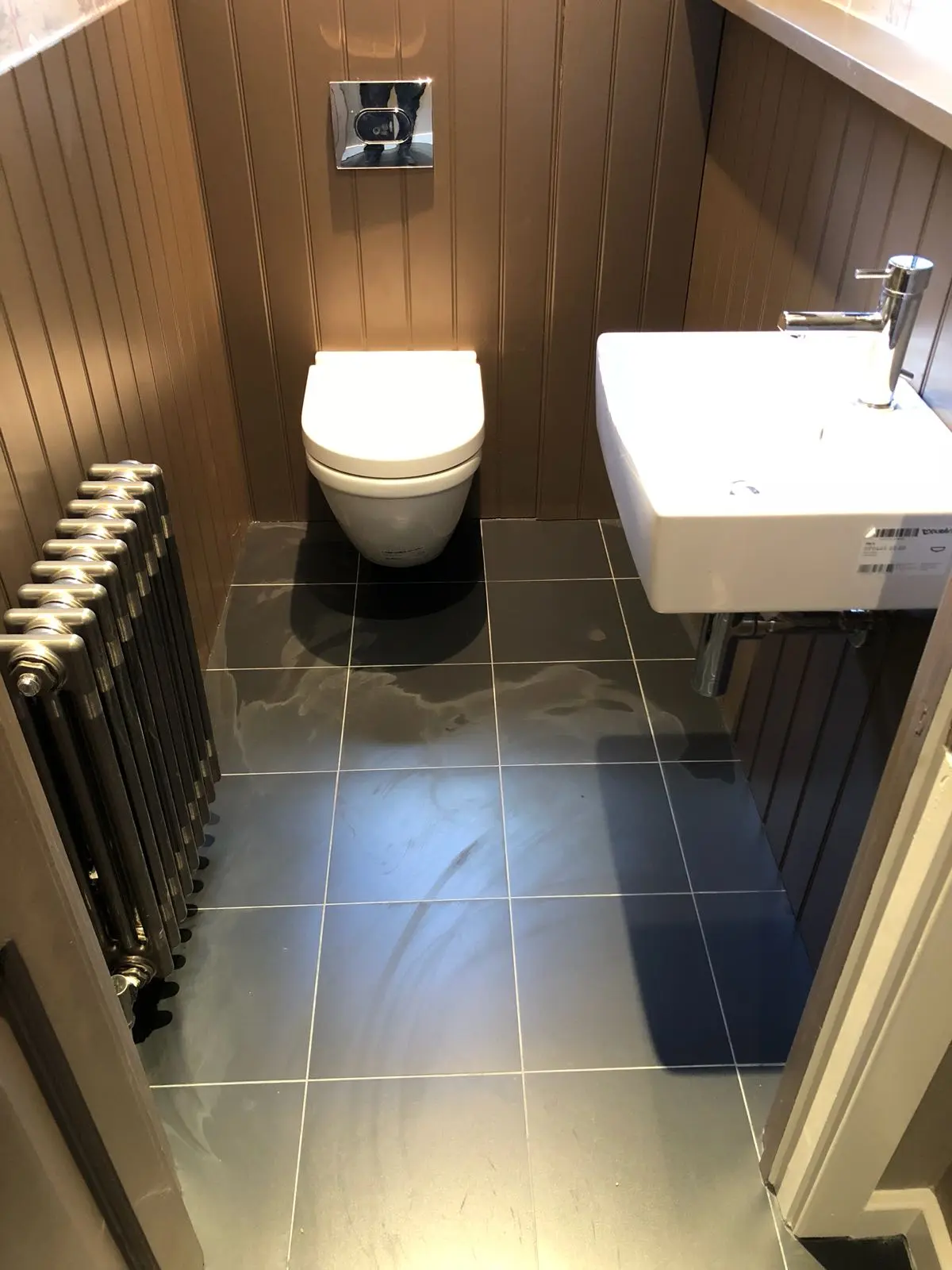
Retaining sensible positions for the toilet, bath and basin can avoid unnecessary changes to drainage and connections. Before paying to move a fitting, identify the benefit: better access, usable storage or a shower that genuinely fits the household. A small visual improvement may not justify opening floors and rerouting services.
Keeping the layout is not a reason to conceal a problem. Existing pipework or substrates may still need attention. Ask the fitter to distinguish essential remedial work from optional changes, so you can choose savings without accepting a poorly prepared installation.
Compare the whole specification, not the headline total
An inexpensive suite does not represent the whole bathroom cost. Check preparation, disposal, plumbing, electrical work, tiling and finishing alongside the products. Compare quotations using the same tile coverage and product specification; otherwise the difference may reflect omitted work rather than a saving.
As a current national guide, Checkatrade’s 2026 page lists bathroom fitter day rates of roughly £320–£480. That is not a fixed price for Watford, and a day rate alone cannot establish your final bill. Confirm the expected labour, what additional trades are included and how changes would be priced.
Spend on the hidden work you cannot easily replace
Protect the allowance for sound surfaces, waterproofing where required, appropriate drainage and competent electrical work. Replacing a decorative mirror later is relatively straightforward; correcting an unsuitable surface behind completed tiles can involve removing the finish. Ask what preparation the quotation assumes and how concealed problems will be handled.
Avoid specifying products purely because they are heavily discounted. Confirm dimensions, compatibility, maintenance access and replacement-part availability. A cheap concealed fitting can become expensive if a future repair requires opening a finished wall.
Use one deliberate feature instead of upgrading everything
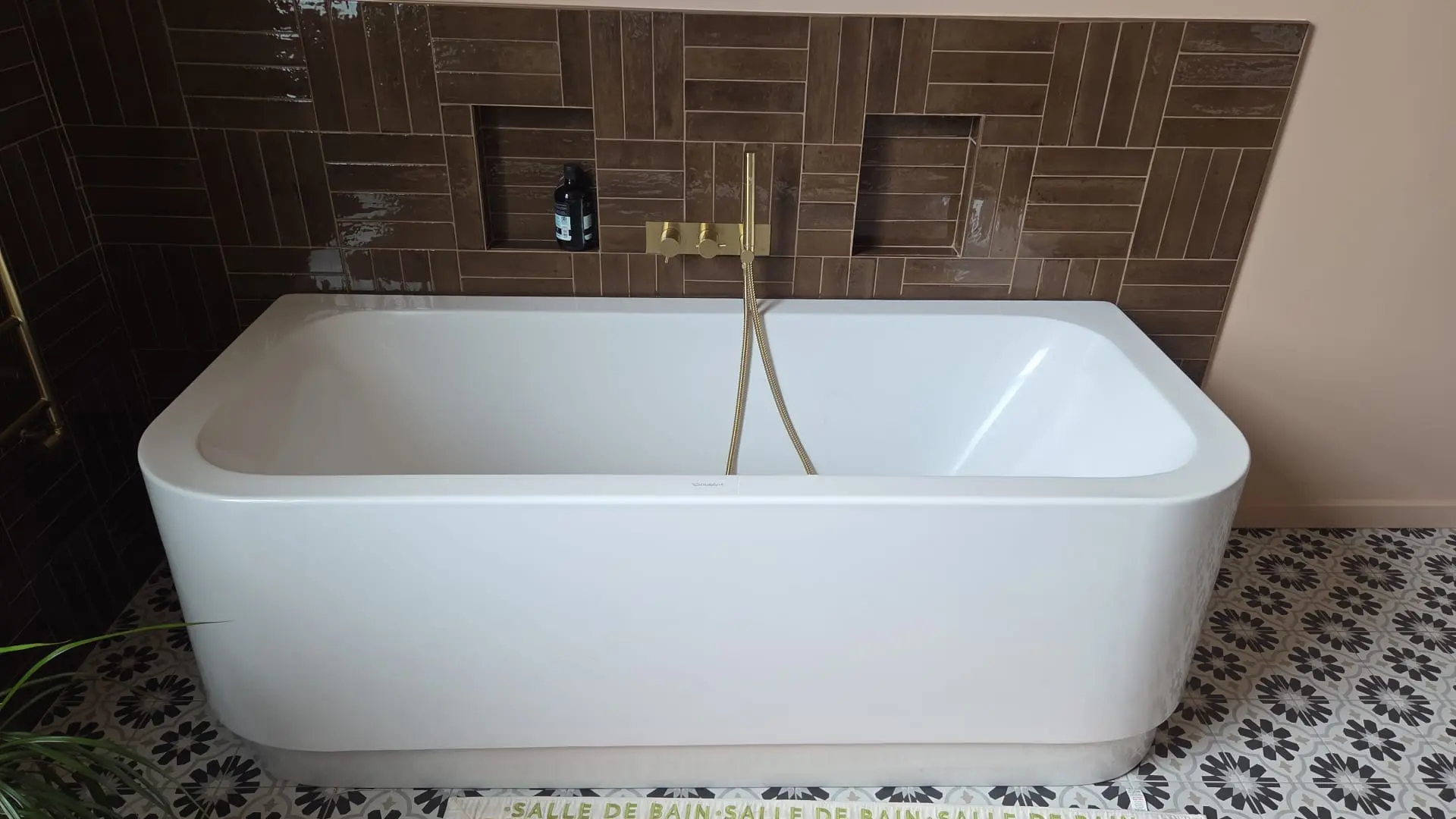
You do not need a premium finish on every surface to create a considered room. The 2026 UK Houzz Bathroom Trends Study found that 36% of surveyed renovating homeowners were adding or updating an accent wall. The June 2026 survey involved 569 Houzz UK users, so the figure describes that sample rather than every bathroom project.
A single feature wall can be a way to concentrate decorative spending, but price the detail before assuming it is cheaper. Small tiles, complex patterns, trims and niches can increase fitting work. Compare an uncomplicated finish with the feature you want, then choose the improvement that gives you the most enjoyment for the extra cost.
Consider water use alongside the purchase price
Running costs belong in the specification too. Waterwise says low-flow shower heads use around 6 litres per minute, compared with 10–15 litres for a standard head. On those figures, an eight-minute shower would use approximately 48 litres rather than 80–120 litres. That calculation is illustrative; actual flow and use depend on the installation and habits.
Check that the chosen shower head suits the shower and available pressure. An unsuitable restrictor is not a good saving if the shower performs poorly. Compare product flow information and discuss compatibility with the installer, particularly where an electric shower is involved.
Avoid turning a bargain into a delivery problem
Standard sizes and readily available products can make replacements and coordination easier. Check what arrives in the box: a basin may not include its tap or waste, and a shower tray may need a separate support or fitting kit. A missing component can create extra ordering and installation time.
If you purchase materials yourself, agree responsibility for measurements, suitability and returns. Inspect deliveries before the start date and store them safely. Keep the product references with your spending plan so substitutions do not silently change the specification.
Choose any DIY contribution carefully
Painting a suitable dry-area wall after the fitting work may be a practical way to contribute, if you have the skills and the installer agrees the timing. Do not assume taking on removal or tiling will reduce the quote: poorly prepared surfaces or damaged connections can create more work.
Discuss the boundary in writing. Avoid DIY electrical work, complex plumbing or waterproofing beyond your competence. Ask what you can prepare safely, what materials are suitable and whether your contribution affects any agreed guarantee. A saving is useful only if it does not compromise the result.
Freeze the plan, then record every variation
Once the products and scope are agreed, resist small upgrades that accumulate during the job. A dearer screen, different tile pattern and extra niche can together exceed the money saved elsewhere. Ask for the effect on both price and timing before agreeing a change.
Review the final room against the specification and keep funds available for outstanding agreed items. A budget that covers the whole process is more effective than one that buys the suite cheaply but leaves you short for preparation, testing or a proper finish.
A practical bathroom without an open-ended bill
Keep the layout decisions, product choices and reserve visible in one spending plan. A.C.O Heating And Plumbing Ltd provides bathroom installation services in Watford and can discuss a specification suited to your room and priorities. Follow the service button to enquire about fitting and the work your budget needs to cover.